The story
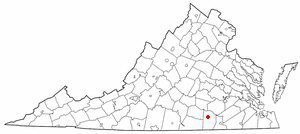
from WikipediaRead it all ↗For much of the 20th century, Alberta marked the junction of two railroad mainlines. The Richmond, Petersburg and Carolina Railroad from Petersburg, Virginia to Ridgeway Junction (today Norlina, North Carolina) was completed in 1900, at which point it was merged into the Seaboard Air Line (SAL). By 1914, the population of Alberta was estimate by the railroad to be somewhere around 100. The Seaboard line (dubbed the "S-line" after later mergers) continued to operate into the 1980s, and today Alberta is along the abandoned portion of the CSX Norlina Subdivision. The Virginian Railway opened in 1907 from Norfolk to Victoria, Virginia, passing through Alberta (with through-service from the coalfields of Appalachia starting in 1909). The Virginian continued in use until it was gradually abandoned following a merger with Norfolk and Western in the later half of the 20th century.
Text from Wikipedia, licensed CC BY-SA 4.0.
Start Alberta’s collection
The first neighbors to add old photos shape how Alberta’s history is told.
0 of 10 decades since 1900 have photos 📦Share a family photoSign in to add one+10Alberta, decade by decade
2000
Nothing in Alberta is on the National Register yet
That’s true of most small towns. It doesn’t mean Alberta has no history, only that no one has written up a nomination. The closest listed place is St. Paul's School in Alberta, 4.3 miles away.
Alberta and the nearest listed places
How a place gets listed
Then & now
When neighbors add old photos, retakes from the same spot appear here side by side.
Stories next door
nearby towns’ historyFrom Wikimedia Commons (1). Images are copied here with their credits and licenses, shown on each photo’s page. Refreshed monthly.