Swansboro’s history is
mostly unwritten
The public archives hold just one old photo of Swansboro. The rest are in attics, shoeboxes and the historical society. Help start the collection.
The story
from WikipediaRead it all ↗Swansboro started as a settlement around the plantation of Theophilus Weeks. In 1783, Swansboro was incorporated as a town, taking its name from Samuel Swann, a Speaker in the North Carolina House of Commons and a resident of Onslow County. In 1818, Otway Burns built the Prometheus, the first river steamboat constructed in North Carolina.
The town, originally spelled Swannsborough, is sometimes called "The Friendly City by the Sea". M.N. Lisk, a popular Swansboro mayor, initiated the annual Mullet Festival, one of the first coastal seafood festivals in North Carolina.
The town is featured as the setting of Nicholas Sparks' novel The Guardian.
The Swansboro Historic District was listed on the National Register of Historic Places in 1990.
Text from Wikipedia, licensed CC BY-SA 4.0.
Timeline
built from the dates on the items belowStart Swansboro’s collection
The first neighbors to add old photos shape how Swansboro’s history is told.
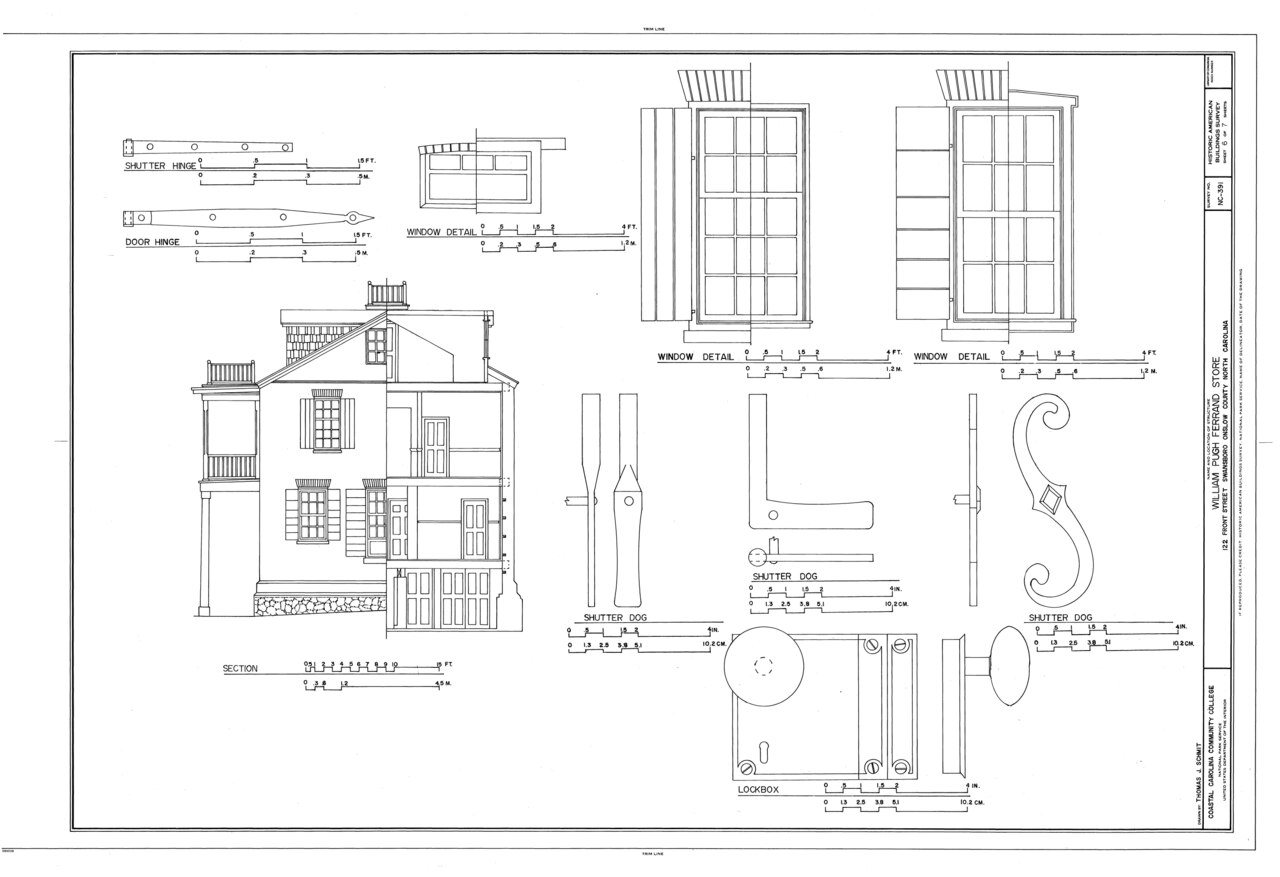
1 of 10 decades since 1900 have photos 🔁Retake an old viewHABS NC,67-SWAN,1- (sheet 6 of 7)…, 1933: stand where they stood+15 📦Share a family photoSign in to add one+10Swansboro, decade by decade
1990s

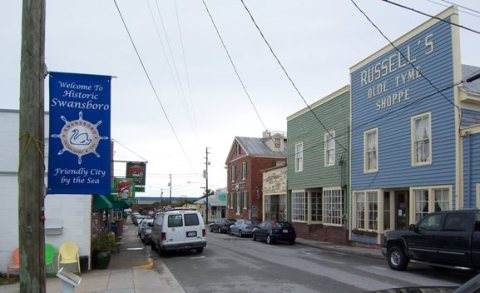
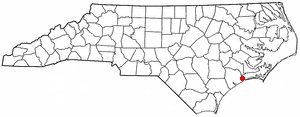
2 historic places in Swansboro
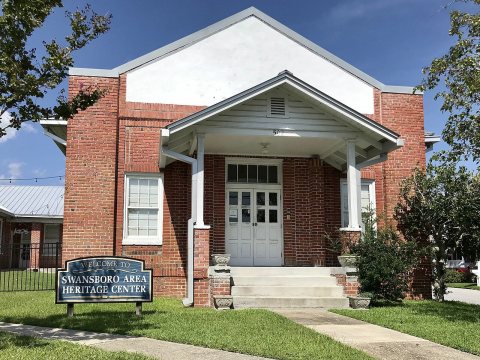
Swansboro has 2 listings on the National Register, and they protect 76 historic buildings, because Swansboro Historic District (Additional Documentation) alone counts 74.
Where they are
When they were listed
Then & now
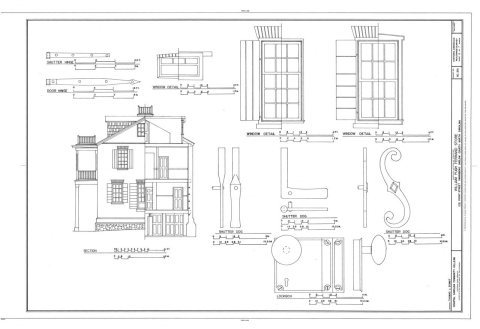
No then-and-now pairs yet. Take a photo from the same spot as HABS NC,67-SWAN,1- (sheet 6 of 7) - William Pugh Ferrand Store, 122 Front Street (1933) and it appears here side by side.
🔁 Retake this view · +15Stories next door
nearby towns’ historyFrom Wikimedia Commons (7) and the National Register (1). Images are copied here with their credits and licenses, shown on each photo’s page. Refreshed monthly.