
A history of Rome,
since 1870
Postcards, papers and photographs of Rome from public archives, woven together by decade. Neighbors fill in the gaps.
The story
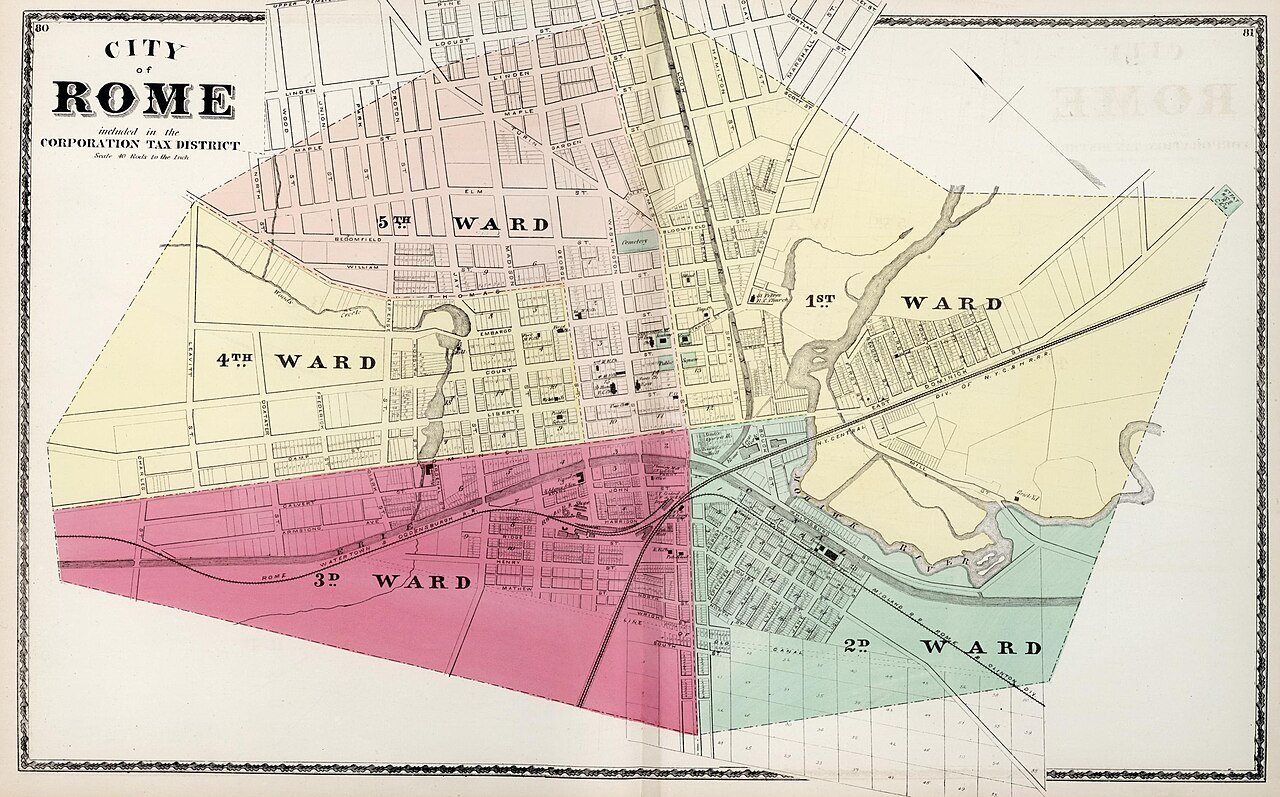
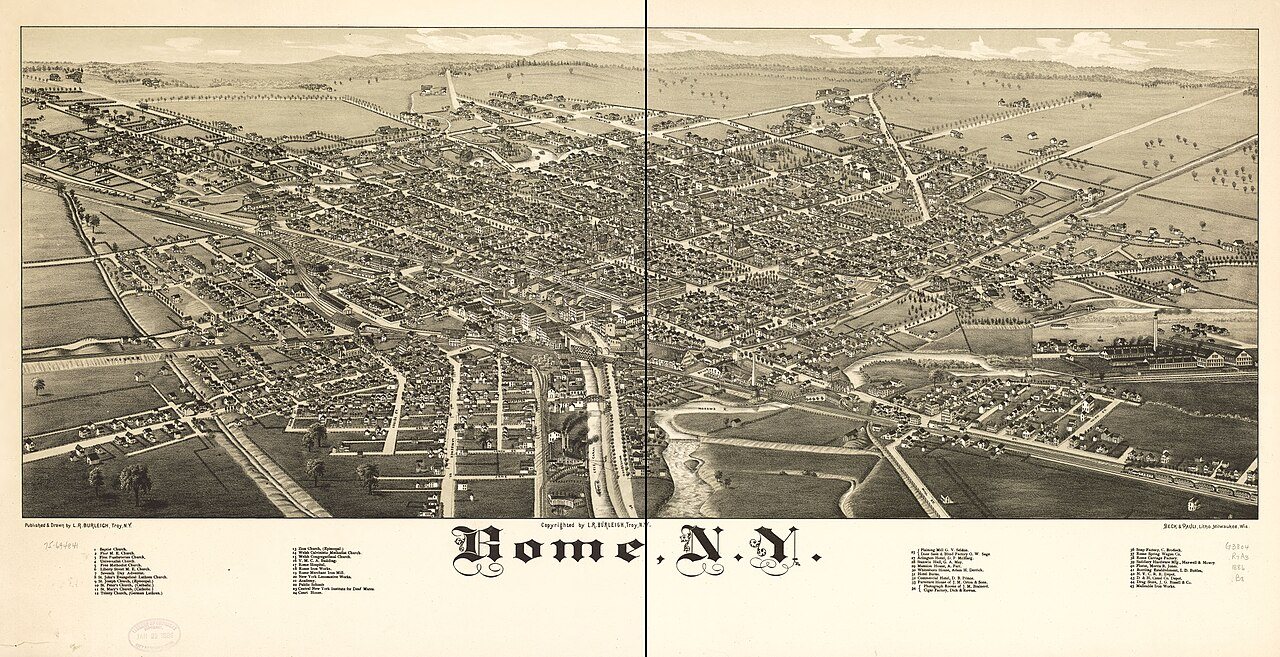
from WikipediaRead it all ↗Rome was founded along an ancient Native American portage path known as the Oneida Carrying Place, Deo-Wain-Sta, or The Great Carrying Place to the Six Nations (Iroquois), or the Haudenosaunee in their language. These names refer to a portage road or path between the Mohawk River to the east, which flows east to the Hudson River, and Wood Creek to the west, which flows into Oneida Lake and, eventually, Lake Ontario via the Oneida and Oswego Rivers. Now located within the modern Rome city limits, this short portage path was the only overland section of a water trade route stretching more than 1,000 miles between Lake Ontario and the lower Hudson. Travelers and traders coming up the Mohawk River from the Hudson had to transfer their cargo and boats and transport them overland between 1 and six miles (depending on the season) to continue west on Wood Creek to Oneida Lake which was drained …
Text from Wikipedia, licensed CC BY-SA 4.0.
Timeline
built from the dates on the items belowFinish Rome’s story
Most archives stop around 1920. The photos from after that are in family albums, not libraries.
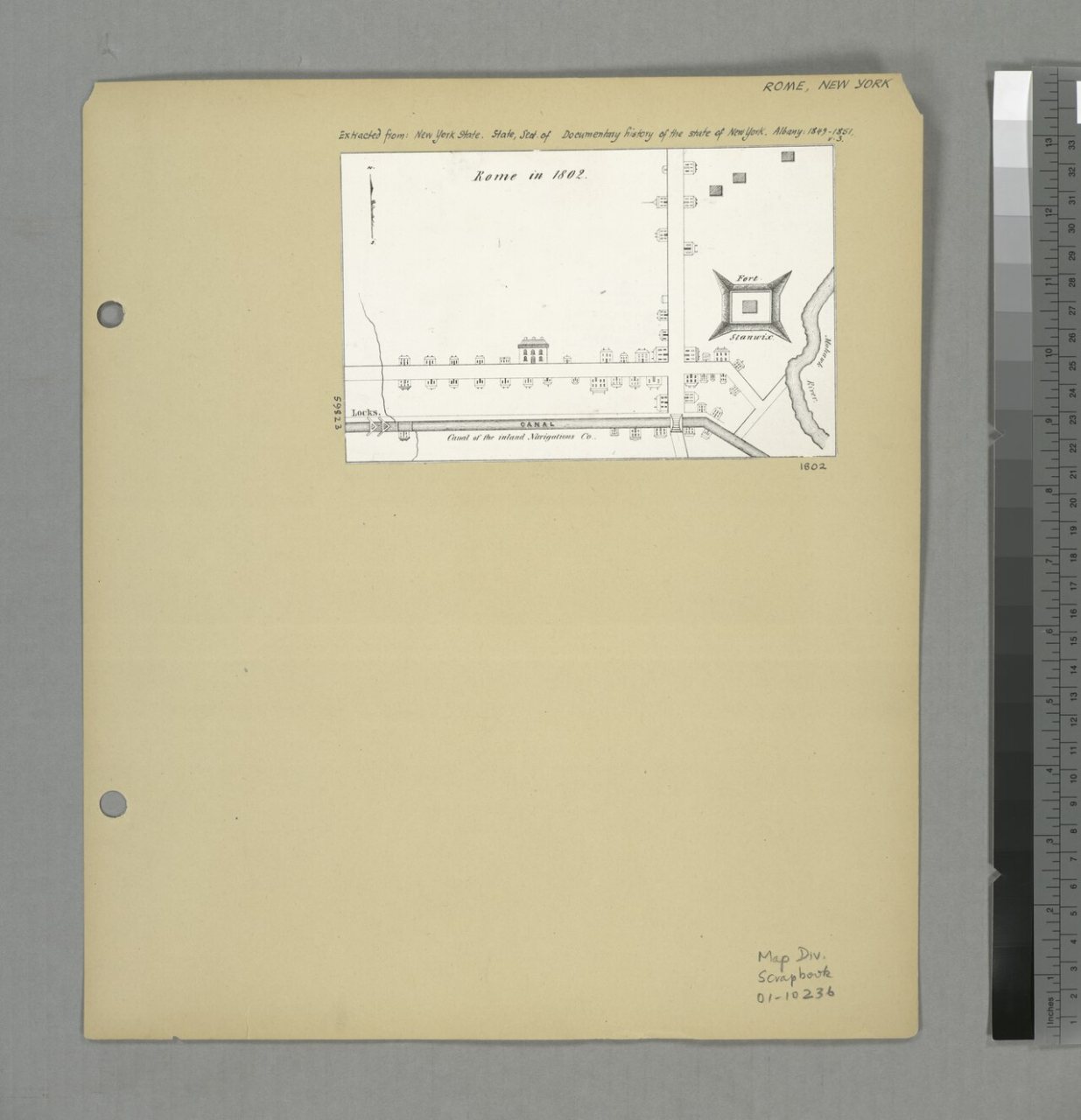
0 of 10 decades since 1900 have photos 🔁Retake an old viewRome in 1802, c. 1850: stand where they stood+15 📦Share a family photoSign in to add one+10Rome, decade by decade

1990s
Then & now
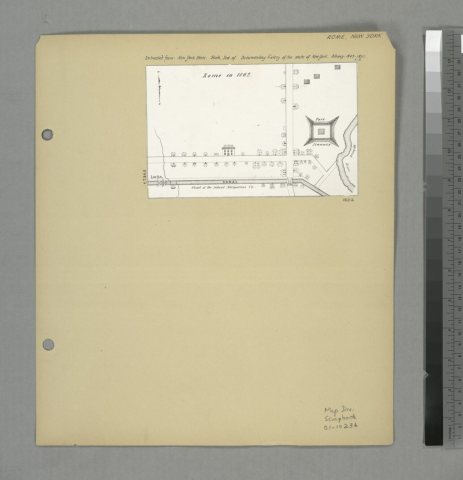
No then-and-now pairs yet. Take a photo from the same spot as Rome in 1802 (c. 1850) and it appears here side by side.
🔁 Retake this view · +15Historic places
National Register · via Wikidata
From Wikimedia Commons (4), the Library of Congress (1) and the National Register (1). Images are copied here with their credits and licenses, shown on each photo’s page. Refreshed monthly.