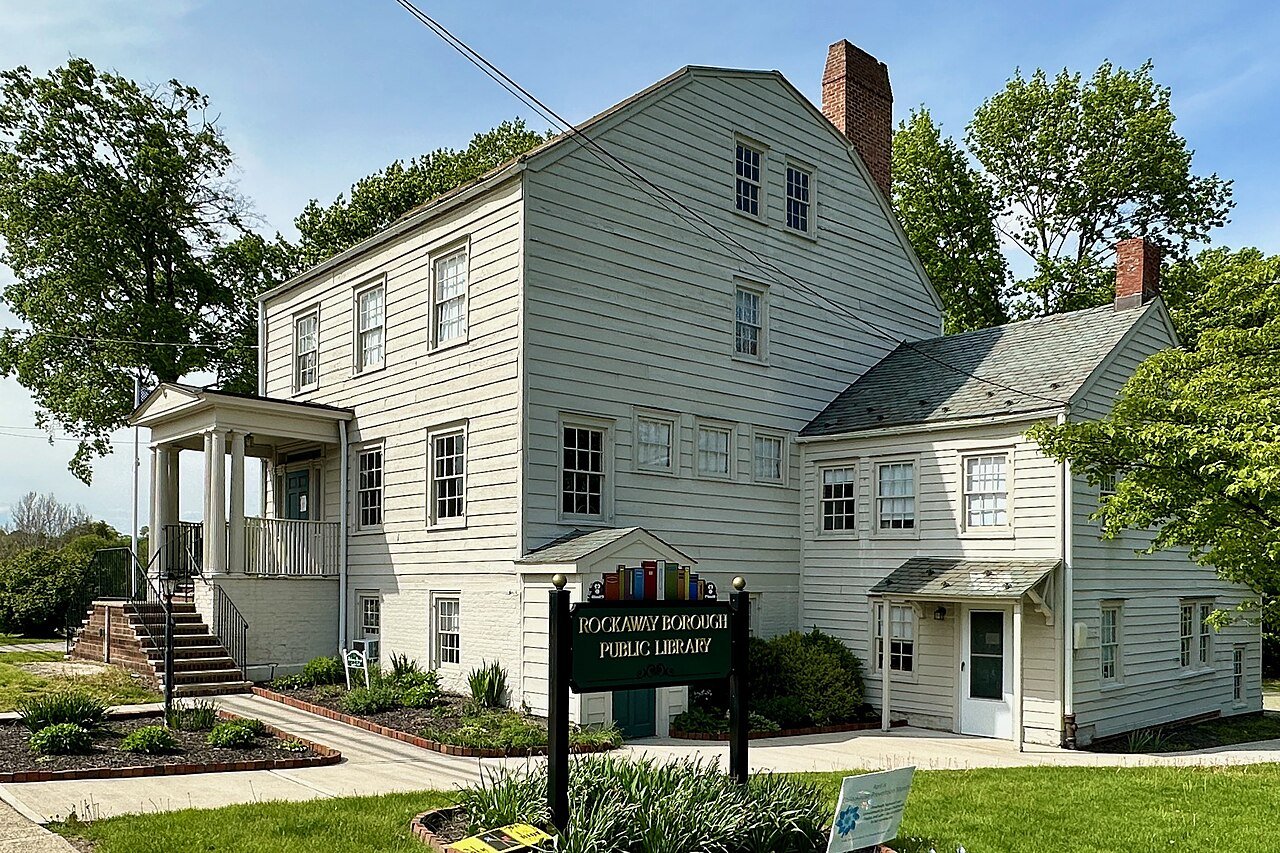
Libraries in Rockaway
Rockaway Twsp. Pub. Lib. serves Rockaway’s 25,341 residents from 2 locations. Last year it lent 183K books, movies and e-books and logged 103K visits.
What stands out about Rockaway’s libraries
Read from the library’s own yearly report. The page puts what stands out first.
Ahead of most similar-size libraries on 3 of 8 measures
Per resident, against libraries serving 25,000 to 100,000 people across the U.S. A tiny town’s library always looks busier per person, so it’s only compared with its own size.
Rockaway Twsp. Pub. Lib. serves 25,341 people, so it’s measured against U.S. libraries serving 25,000 to 100,000.
2 places to borrow in Rockaway
Rockaway Twsp. Pub. Lib., 61 Mount Hope Road, Rockaway.


E-books and audiobooks from home. Loans renew on their own if no one’s waiting. Research databases: courses, journals, genealogy.
New in Rockaway? The Handbook →Hours are the survey’s yearly average. Check the library’s own site for today’s hours.
Other libraries in Rockaway
Every hour the doors are open, about 47 items go out
Fiscal year 2024. The library’s own count.
Almost half the print loans are kids’ books
183K loans last year: print, kids’ and digital.
Each of the 76K books and other items on the shelves went out about 1.7 times last year, on average.
49,987 e-books, e-audiobooks and streams last year. Borrow from home with your card, plus research databases: courses, journals, genealogy and more.
About 3 kids’ programs a week
Story times, clubs, classes and events, by who they’re for.
Programs last year by age group
story times and programs a week for ages 0–5, on average.
children’s books and media borrowed per child under 18 in Rockaway last year.
For every $1 it spends, the library lends about $1.67 worth
Set what you’d borrow in a month. It starts at what the average Rockaway cardholder borrows.
Typical for a library this size: $40. Operating budget $1.7M.
Last year the library lent and hosted about $2.8M worth of books, e-books, programs and Wi-Fi on a $1.7M budget.
Late fines apply to some overdue items.
Retail prices are typical, rounded down: a new book $17, a kids’ book $12, an e-book or e-audiobook $15, a movie rental $4, a class or program $10, a computer or Wi-Fi session $3. The average cardholder’s month = the library’s yearly loans, attendance and Wi-Fi sessions ÷ its 16,013 cardholders ÷ 12.
Libraries next door
Rockaway ranks 3rd of 7 for borrowing per resident. Tap a town to see its library.
| Town | Library | Loans per resident | Hours |
|---|---|---|---|
| Denville | Denville Free Public Library fine-free | 12.3 | 33 |
| Randolph | Randolph Twsp. Free Pub. Lib. fine-free | 9.1 | 64 |
| Rockaway | Rockaway Twsp. Pub. Lib. | 7.2 | 62 |
| West Milford | West Milford Twsp. Library | 5.7 | 59 |
| Jefferson | Jefferson Twsp. Pub. Lib. | 5.4 | 72 |
| Wharton | Wharton Public Library | 3.1 | 41 |
| Dover | Dover Free Public Library | 1.2 | 52 |
| White Meadow Lake | None of its own | — | — |
| Newfoundland | None of its own | — | — |
| Boonton | None of its own | — | — |
Loans = print + digital items borrowed in the library’s fiscal year, per person it serves. — = no library of its own, a county or regional system (its numbers cover many towns), or no report.
About these numbers
From the Public Libraries Survey, fiscal year 2024.
- Hours are an average. The survey reports a building’s public hours for the whole year. We divide by the weeks it was open, so check the library’s own site for today’s hours.
- Compared by size. “Similar-size” means libraries serving about as many people, nationwide. Per-resident numbers always flatter the smallest towns, so they’re never compared with big cities.
- The library’s own count. Libraries report their own visits, loans and programs. A library that didn’t respond keeps its address and hours here, with no numbers.
Book talk
Reading, story times and the library in Rockaway.
Your answer becomes a post in Town Square.
Libraries: Institute of Museum and Library Services, Public Libraries Survey, fiscal year 2024. Each library reports its own numbers. Distances are straight-line from the town center. “What your card is worth” uses typical retail prices and is an estimate, not an official figure.