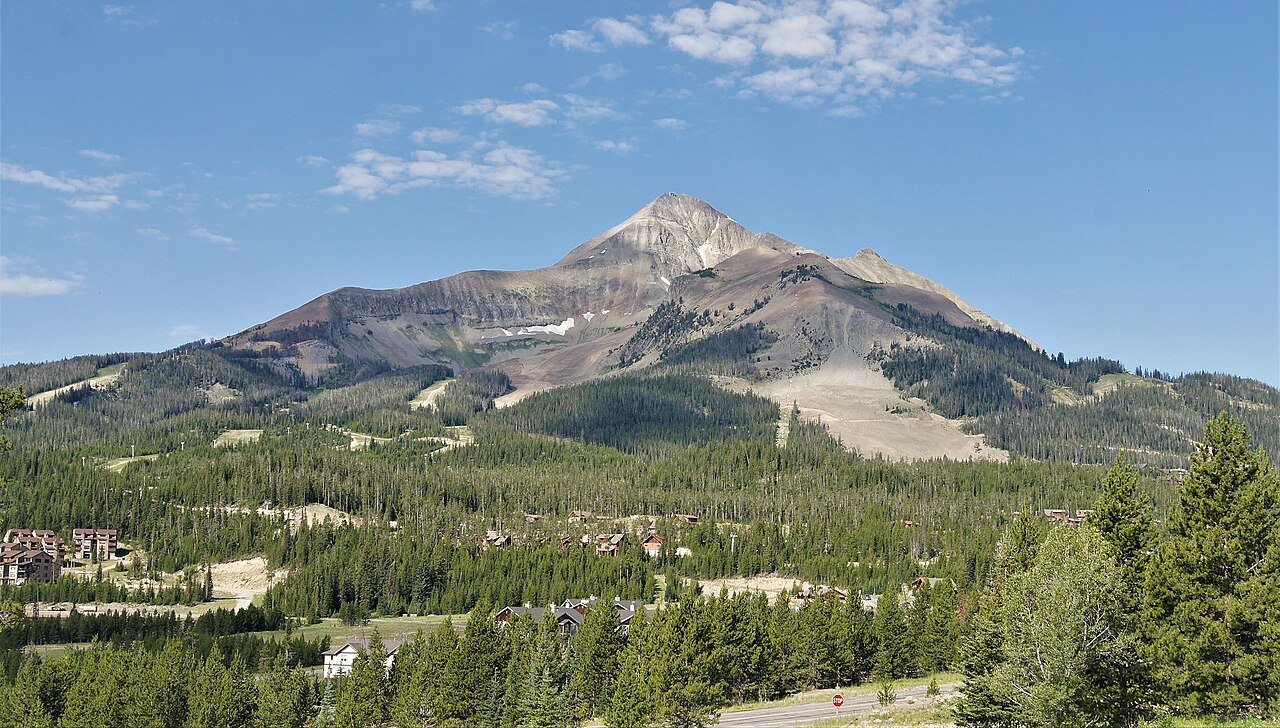
Big Sky has cold winters and pleasant summers, with very little rain
A typical July afternoon reaches 78°, a January night drops to 8°.
A year in Big Sky at a glance
Each month’s typical high and low, and what it brings.
What stands out about Big Sky’s climate
Read from where Big Sky sits among Montana’s towns. The page puts what stands out first.
What a year in Big Sky feels like
Typical highs and lows by season and by month, from NOAA’s 30-year normals.
Rain and snow in Big Sky
June is the wettest month and February the driest.
Rain + melted snow by month
Inches of water
Snowfall by month
No snow records from a nearby station.
A year-round growing season
Freezing nights are uncommon in Big Sky.
Freezing nights by month
Average nights at or below 32°
90° days by month
Average days at 90° or more
Warmer than it used to be
The last 30 years in Big Sky averaged 1.2° warmer than the 1900s. The biggest change is in January (+3.4°).
A smaller shift than in 52% of U.S. towns.
Change by month
Living with Big Sky’s climate
What the numbers mean for a garden, a driveway, a furnace and a free afternoon.
Only 100% of years see a freezing night, so tender plants can stay out most winters.
Months averaging under 55° run from September through June. Heating is 100% of the year’s heating-and-cooling load.
About 1 days a year reach 90°, and July afternoons average 78°.
The nicest months are July and August. 171 miles of trails are waiting.
Parks & trails →Normals are averages. Ice storms, nor’easters, floods and heat waves are on the natural hazards page.
Natural hazards →How Big Sky compares
Against every U.S. town on TownTapestry, each counted once, with its place in Montana.
Big Sky weather by month
Average highs, lows, rain and snow for every month, from NOAA’s 1991–2020 normals.
| Month | High | Low | Rain + melt | 30-yr range |
|---|---|---|---|---|
| January | 30° | 8° | 1.4" | 13° – 25° |
| February | 33° | 9° | 1.2" | 15° – 28° |
| March | 42° | 16° | 1.4" | 23° – 34° |
| April | 48° | 23° | 2.0" | 30° – 41° |
| May | 58° | 31° | 2.7" | 38° – 49° |
| June | 67° | 37° | 2.9" | 45° – 59° |
| July | 78° | 42° | 1.5" | 49° – 66° |
| August | 77° | 40° | 1.5" | 53° – 62° |
| September | 67° | 34° | 1.6" | 46° – 54° |
| October | 52° | 25° | 1.9" | 30° – 45° |
| November | 37° | 15° | 1.5" | 17° – 34° |
| December | 29° | 8° | 1.5" | 12° – 22° |
| Year | 51° | 24° | 21.2" |
Heating and cooling a home in Big Sky
100% of the work is heating, so the furnace matters far more than the air conditioner.
Degree days add up how far each day’s average falls below (heating) or rises above (cooling) 65° over a year. Source: NOAA station normals.
How much a month can swing
A normal is an average. November swings the most: from 1991 to 2020 its average ranged from 17° to 34°. September is the most reliable, staying within 8°.
Common questions about Big Sky’s climate
What is the coldest month in Big Sky?
December, with a typical high of 29° and a low of 8°.
What is the hottest month in Big Sky?
July, with a typical high of 78° and a low of 42°. About 1 days a year reach 90°.
When is the first frost in Big Sky?
Frost is uncommon. Only 100% of years see a night at 32° or below.
What is the rainiest month in Big Sky?
June, with 2.9 inches of rain and melted snow. The year totals 21 inches.
Neighbors talk weather
Gardens, snow, and the best days of the year in Big Sky.
Your answer becomes a post in Town Square.
Temperatures and rainfall come from NOAA’s gridded climate normals for Big Sky itself (about a 3-mile square). Snow, frost dates and day counts come from NOAA’s weather station at Big Sky 2wnw, MT (1 mi, frost, heat and degree days). Normals are 30-year averages, not a forecast. Source: NOAA NCEI U.S. Climate Normals, 1991–2020 and 1901–2000. Today’s forecast: National Weather Service.