The story
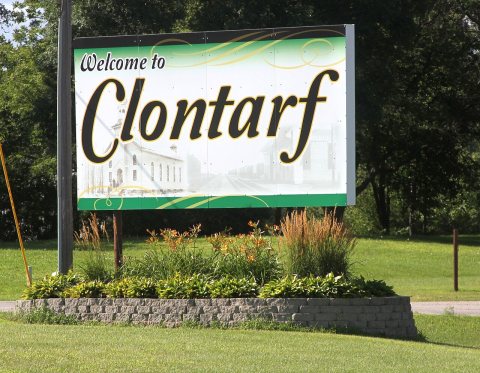
from WikipediaRead it all ↗Clontarf was platted in 1876, and named after Clontarf in Ireland, the native land of many of its early settlers. A post office has been in operation at Clontarf since 1876. The city was founded by Bishop John Ireland as a catholic colony, and a community for Irish-Americans. The city grew quickly and became prosperous due to the influx of Irish immigrants. In 1878, a public school opened, a grain elevator opened, and the completion of St. Malachy Church was completed. The city would deal with grasshopper plagues, grass fires, and failed crops. In response, the agriculture and economy of the area shifted towards hay production, which was more resilient to these issues. Railroad access made Clontarf a hub for hay production, being known as the 'hay capitol of the world' by the 1910s. Clontarf was incorporated as a village in 1904. The church of St. Malachy was merged with St. Francis in …
Text from Wikipedia, licensed CC BY-SA 4.0.
Start Clontarf’s collection
The first neighbors to add old photos shape how Clontarf’s history is told.
0 of 10 decades since 1900 have photos 📦Share a family photoSign in to add one+10Famous people close to Clontarf
See all 11 →


Clontarf, decade by decade
2000


Nothing in Clontarf is on the National Register yet
That’s true of most small towns. It doesn’t mean Clontarf has no history, only that no one has written up a nomination. The closest listed place is Christian F. Uytendale Farmstead in Benson, 5.3 miles away.
Clontarf and the nearest listed places
Closest to Clontarf
 Swift County CourthouseBenson · Richardsonian Romanesque · Built 18985.8mi
 Church of St. Francis Xavier-CatholicBenson · Renaissance5.8mi
 Christ Church-EpiscopalBenson · Gothic Revival5.9mi
 Church of St. Bridget-CatholicDe Graff · Gothic Revival · Built 190113.2mi
How a place gets listed
Then & now
When neighbors add old photos, retakes from the same spot appear here side by side.
Stories next door
nearby towns’ historyFrom Wikimedia Commons (4). Images are copied here with their credits and licenses, shown on each photo’s page. Refreshed monthly.