
First Christian Church · National Register of Historic Places
Wabash’s story
177 years in pictures
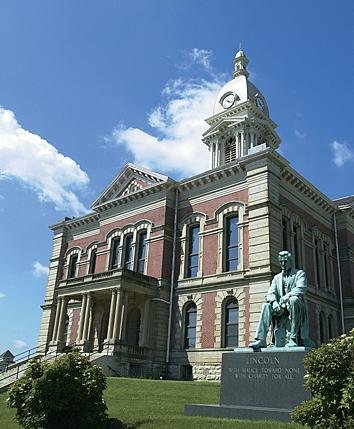
11 places on the National Register of Historic Places.
- 1849Wabash is settled
A town of 10,358, settled in 1849. A typical home worth about $186K.
The 3 things Wabash does most differently from other towns.
11 places on the National Register of Historic Places.
Be the first to start the conversation.
Nothing on the calendar.
Ordered by what stands out in Wabash. Another town gets a different order.
About one in 3 of Wabash’s working residents works in town. The top destinations are Noble (6%), Marion (4%) and Huntington (4%). Half commute less than 15 miles.
The typical Wabash home is worth about $186,000, up 5.5% in a year, 29% below the Indiana typical home.
Wabash beats the Indiana average on 1 of 32 CDC measures and trails it on 7.
| What stands out | Wabash | IN |
|---|---|---|
| More adults treating high blood pressure | 80.4% | 77.4% |
| More older adults who have lost all their teeth | 21.6% | 15.4% |
1.9 miles of trails across 12 parks and preserves.
| Biggest places to walk | Trails | Acres |
|---|---|---|
| 1. Paradise Spring Historical Park | 0.4 mi | 19 |
| 2. Field of Dreams Ball Park | 0.3 mi | 44 |
| 3. Wabash City Park | 0.2 mi | 41 |
Wabash has chilly winters and warm summers. A typical July afternoon reaches 84°, a January night drops to 19°, and about 20 inches of snow falls in a normal winter.
Expected storm and flood damage is higher than in 45% of U.S. communities.
11 places in Wabash on the National Register of Historic Places.
City in Indiana, United States
Wabash is a city in Noble Township, Wabash County, Indiana, United States. As of the 2020 census, Wabash had a population of 10,440. The city is situated along the Wabash River and is the county seat of Wabash County. Wabash is notable as claiming to be the first electrically lighted city in the world, which was inaugurated on March 31, 1880. However, closer inspection of the reference shows only the court house grounds were lighted. It is also home to the historic Eagles Theatre, Paradise Spring Treaty Grounds (1826), the Wabash and Erie Canal, Presbyterian Church (1880), and Disciples of Christ Christian Church (1865).
From Wikipedia, licensed CC BY-SA 4.0 · facts via Wikidata (CC0)


