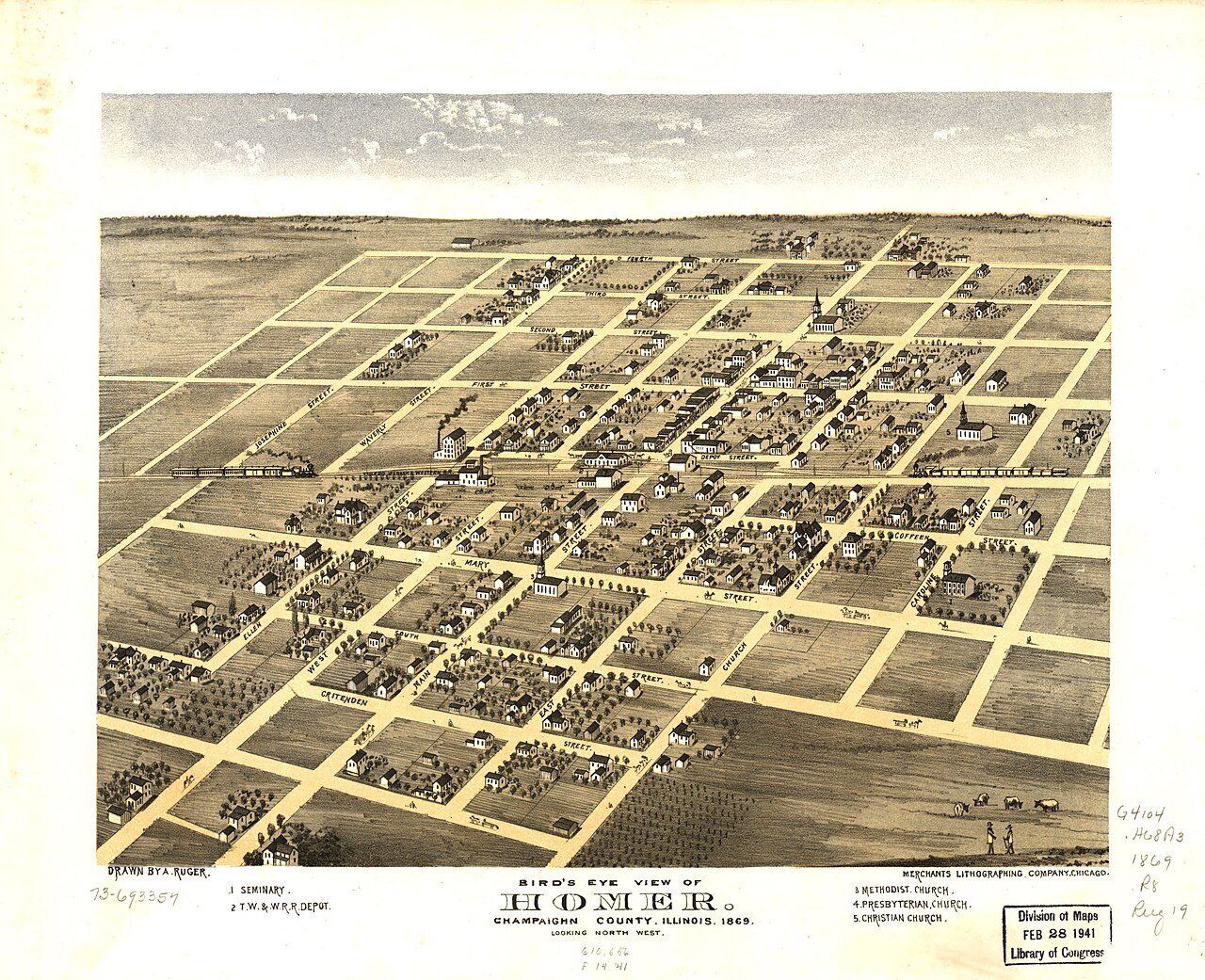
Homer’s history is
mostly unwritten
The public archives hold just one old photo of Homer. The rest are in attics, shoeboxes and the historical society. Help start the collection.
The story
from WikipediaRead it all ↗Homer grew from a settlement named Union, which was on the Fort Clark or State Road running between Danville and Urbana, nearly three miles north of the present town. Union was little more than several cabins built in 1829–30, but it served as a post office and meeting place in what was Vermilion County prior to the creation of Champaign County in 1833. Moses Thomas, a native of Pennsylvania, built a mill on the Salt Fork creek southeast of Union in 1834 and began to mill grain. A young merchant traveling from Indiana, Michael Doctor Coffeen, built a store adjacent to the mill, and with Thomas created the village of Homer on January 26, 1837. The post office was moved to Homer with M. D. Coffeen as postmaster in 1841.
Text from Wikipedia, licensed CC BY-SA 4.0.
Start Homer’s collection
The first neighbors to add old photos shape how Homer’s history is told.
0 of 10 decades since 1900 have photos 🔁Retake an old viewBird's eye view of Homer, Champai…, 1869: stand where they stood+15 📦Share a family photoSign in to add one+10Famous people from Homer
See all 1 →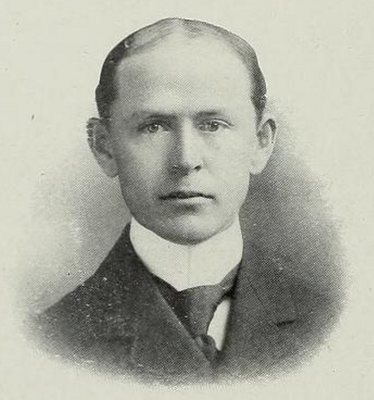
Homer, decade by decade
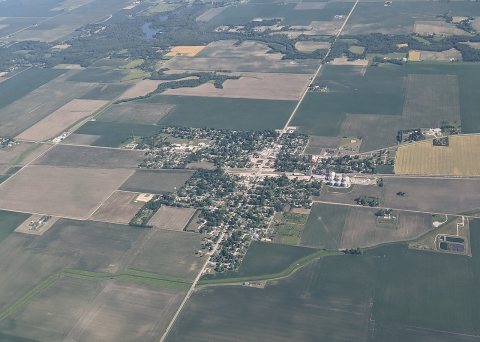
Nothing in Homer is on the National Register yet
That’s true of most small towns. It doesn’t mean Homer has no history, only that no one has written up a nomination. The closest listed place is Lincoln (Statue) in Urbana, 14.2 miles away.
Homer and the nearest listed places


How a place gets listed
Then & now
No then-and-now pairs yet. Take a photo from the same spot as Bird's eye view of Homer, Champaighn (sic) County, Illinois 1869 (1869) and it appears here side by side.
🔁 Retake this view · +15Stories next door
nearby towns’ historyFrom Wikimedia Commons (2). Images are copied here with their credits and licenses, shown on each photo’s page. Refreshed monthly.