Moundville’s biggest natural hazard is inland flooding
Most of the natural-hazard damage FEMA expects in Moundville comes from inland flooding, and overall the risk is high for a U.S. community. Flood insurance has paid 2 claims here since 2000. 5 federal disasters brought FEMA money into town.
What stands out about Moundville’s weather risks
Read from FEMA’s records below. The page puts what stands out first.
Does Moundville flood? Rarely: 2 flood claims since 2000
Every paid claim on a federal flood insurance policy in Moundville, from FEMA’s records.
Moundville isn’t in FEMA’s Community Rating System, which cuts flood insurance up to 45% in towns that do extra flood-proofing.
Insurance rates: Hale County.How exposed is Moundville?
FEMA expects yearly storm and flood damage to homes and buildings here to be higher than in 74% of U.S. communities, mostly from inland flooding and tornadoes.
Rated higher than 398 of the 594 Alabama towns we cover.
Moundville is smaller than a census tract, so it shares the figures of the tract around its center.
What Moundville faces
Each hazard’s share of the damage FEMA expects here, and how it compares with the rest of the country.
Inland flooding
Tornadoes
Lightning
5 federal disasters brought FEMA money to Moundville
Disasters that paid out in Moundville itself (aid to households or repair grants to the Town of Moundville) and its biggest flood years.
- 2023Severe Storms, Straight-Line Winds, and Tornadoes15 households applied for aid$17K aid approved
- 2021Severe Storms, Straight-Line Winds, and Tornadoes23 households applied for aid$49K aid approved
- 2011Severe Storms, Tornadoes, Straight-Line Winds, and Flooding143 households applied for aid$294K aid approved$4K to the Town of Moundville for repairs
- 2005Hurricane Katrina48 households applied for aid$21K aid approved$19K to the Town of Moundville for repairs
- 2004Hurricane Ivan62 households applied for aid$80K aid approved$5K to the Town of Moundville for repairs
Hale County has had 20 natural disasters declared since 1953, most often hurricanes and severe storms.
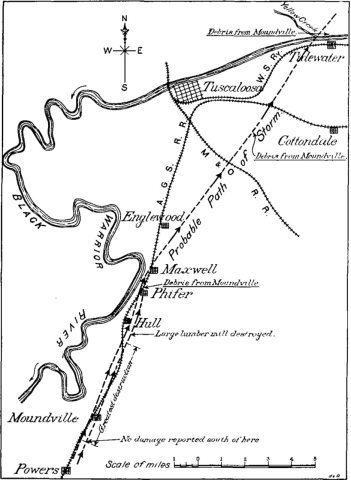 1904 · Path of the 1904 Moundville Tornado
Get ready for what Moundville actually faces
A short kit for its top hazards, what to check before you buy, and where neighbors get alerts.
- Turn around at flooded roads: a foot of moving water can carry off a car.
- Flood insurance usually takes 30 days to start, so buy it before the forecast.
- Keep papers and medicines up high, in a grab-and-go bag.
- Pick your spot now: the lowest floor, an inside room, no windows.
- A watch means be ready; a warning means take cover now.
- Keep shoes and a flashlight by the bed.
- When thunder roars, go indoors.
- Wait 30 minutes after the last thunder.
- Unplug electronics before the storm.
- Look up the address on FEMA’s flood map.
- Ask the seller or landlord whether it has ever flooded, and what flood insurance costs there.
- Get a flood insurance quote early: policies usually start 30 days after you buy.
Know where neighbors sign up for alerts? Add it to the Handbook so everyone has it.
Most disasters here begin in July–September
The month each of Hale County’s 20 declared disasters began, since 1953.
What these numbers can and can’t tell you
- An average, not a forecast. FEMA’s National Risk Index estimates the damage 18 kinds of natural hazards cause in a typical year, from decades of records and models. A quiet decade can follow a bad year.
- Compared by rate. “Higher than N%” compares yearly damage as a share of what’s there, so a big city isn’t rated riskier just for having more buildings.
- Money that reached town. Flood claims are matched to Moundville’s own flood-insurance community; household aid to the registrant’s city; repair grants to the Town of Moundville.
- It follows property value. FEMA’s model weighs damage to buildings, so a place that recently lost many homes can rate lower than it feels.
Storm stories
Memories, warnings and help from neighbors in Moundville.
Your answer becomes a post in Town Square.
Sources: FEMA National Risk Index (December 2025); OpenFEMA: NFIP redacted claims, multiple-loss properties, community status book and residential penetration rates, housing assistance (owners and renters), public assistance funded projects, hazard mitigation properties and disaster declarations. Census tracts: U.S. Census Bureau. Preparedness tips: Ready.gov. An average of past damage, not a forecast.