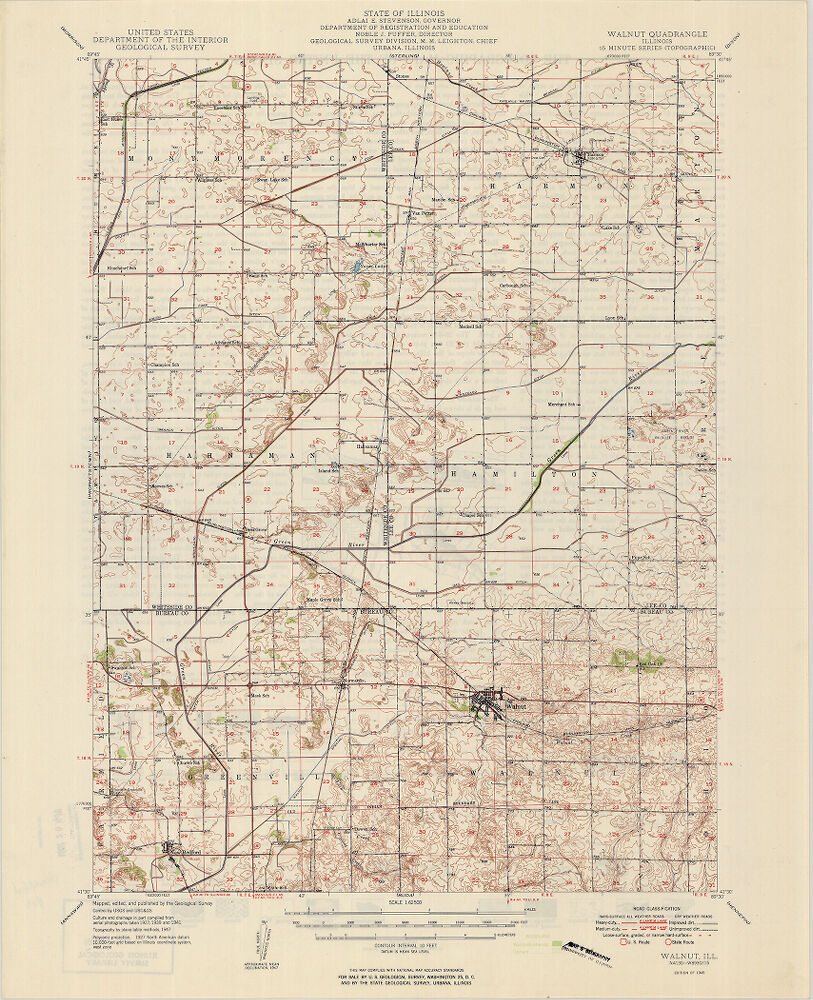
1949 · Walnut quadrangle, Illinois : 15 minute series · Wikimedia Commons
Walnut’s story
Walnut in pictures
2 postcards, papers and photographs from public archives.
A town of 1,408. A typical home worth about $156K.
The thing Walnut does most differently from other towns.
In a town this size, neighbors are the best guide. Ask them anything.
Be the first to start the conversation.
Ordered by what stands out in Walnut. Another town gets a different order.
The typical Walnut home is worth about $156,000, up 10.9% in a year, 48% below the Illinois typical home.
Most working residents leave Walnut for work: only 11% work in town. The top destinations are Princeton (8%), Walnut (7%) and Sterling (6%). Half commute less than 24 miles.
Expected storm and flood damage is higher than in 27% of U.S. communities.
Walnut has cold, snowy winters and pleasant summers. A typical July afternoon reaches 84°, a January night drops to 14°, and about 36 inches of snow falls in a normal winter.
Walnut beats the Illinois average on 3 of 32 CDC measures and trails it on 10.
| What stands out | Walnut | IL |
|---|---|---|
| Fewer uninsured adults | 7.6% | 9.9% |
| Fewer adults facing housing insecurity | 10.3% | 13.2% |
| More older adults who have lost all their teeth | 15.4% | 10.3% |
0.0 miles of trails across 4 parks and preserves.
| Biggest places to walk | Trails | Acres |
|---|---|---|
| 1. Ross Wildlife Area | — | 63 |
| 2. Centennial Park | — | 29 |
| 3. Blue Raider Park | — | 4 |
The public schools Walnut’s kids attend, from kindergarten through graduation, outperform 50% of Illinois’s districts on state tests and graduation. Among towns with similar incomes, they sit near the middle.
| School | Grades | Students | Grade |
|---|---|---|---|
| Bureau Valley North | PK–5 | 183 | B |
Where Walnut’s working residents go each day. Line width shows the share.
Census LEHD 2023
2 postcards, papers and photographs from public archives.
Village in Illinois, United States
Walnut is a village in Bureau County, Illinois, United States. The population was 1,311 at the 2020 census, down from 1,416 at the 2010 census and 1,461 at the 2000 census. It is part of the Ottawa Micropolitan Statistical Area. The village was incorporated on October 26, 1876.
From Wikipedia, licensed CC BY-SA 4.0 · facts via Wikidata (CC0)