
Armour's Warehouse · National Register of Historic Places
Seneca’s story
172 years in pictures
1 places on the National Register of Historic Places.
- 1854Seneca is settled
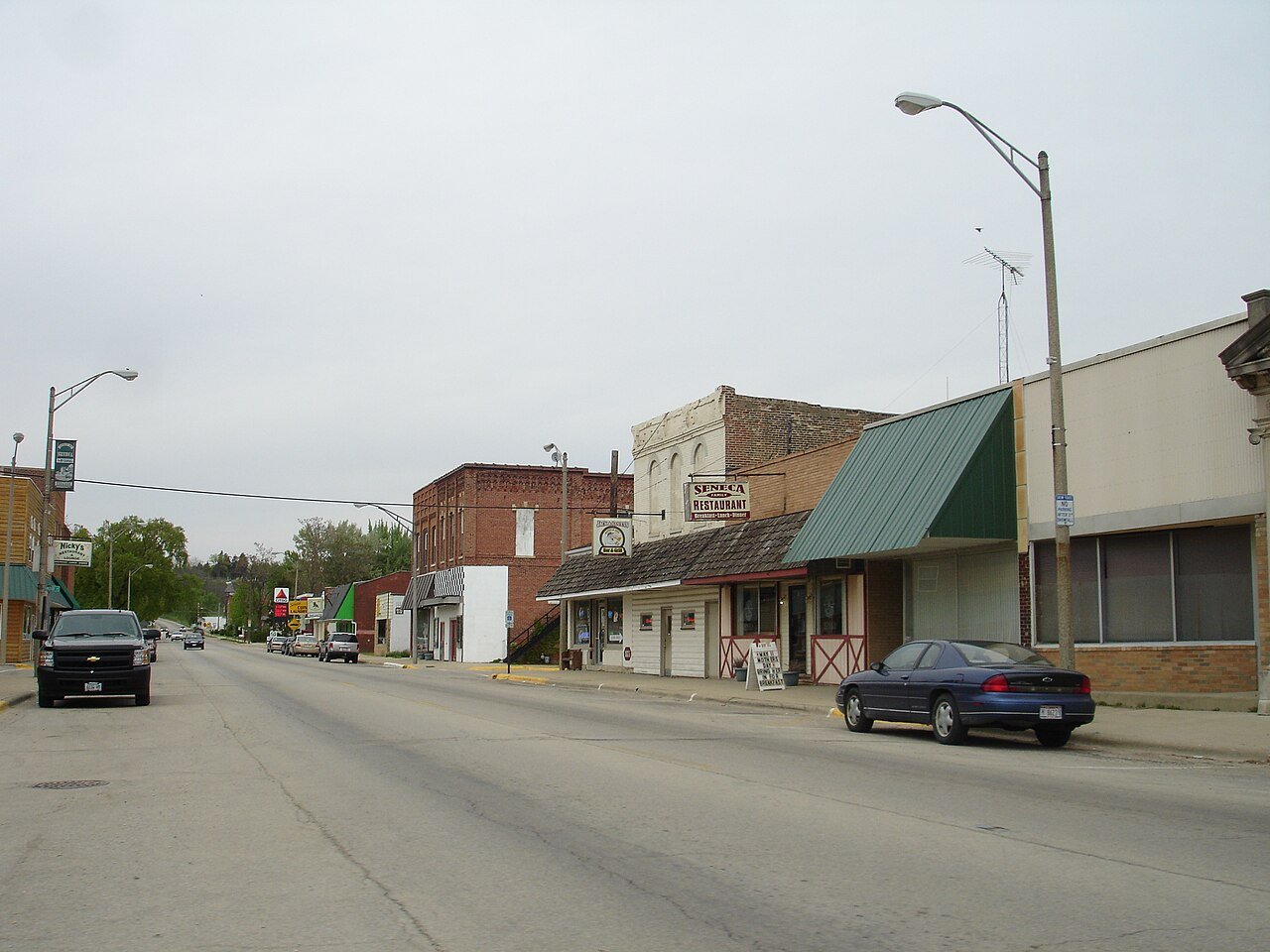
A town of 2,450, settled in 1854. Healthier than 51% of U.S. towns.
The thing Seneca does most differently from other towns.
Where Seneca’s working residents go each day. Line width shows the share.
Census LEHD 2023
Be the first to start the conversation.
Ordered by what stands out in Seneca. Another town gets a different order.
Most working residents leave Seneca for work: only 5% work in town. The top destinations are Ottawa (11%), Morris (6%) and Marseilles (5%). Half commute less than 25 miles.
Seneca beats the Illinois average on 1 of 32 CDC measures and trails it on 5.
| What stands out | Seneca | IL |
|---|---|---|
| Fewer uninsured adults | 7.7% | 9.9% |
| More smokers | 15.8% | 12.1% |
Expected storm and flood damage is higher than in 73% of U.S. communities.
Seneca has chilly winters and warm summers. A typical July afternoon reaches 85°, a January night drops to 16°, and about 25 inches of snow falls in a normal winter.
The typical Seneca home is worth about $258,000, up 5.2% in a year, 13% below the Illinois typical home.
Seneca's reported crime rate is below Illinois's. Most reported incidents are property crimes, mainly thefts. 5 violent crimes were reported in 2025.
1 places on the National Register of Historic Places.
Village in Illinois, United States
Seneca is a village in LaSalle and Grundy counties in the U.S. state of Illinois. The population was 2,353 at the 2020 census, down from 2,371 at the 2010 census. The LaSalle County portion of Seneca is part of the Ottawa, IL Micropolitan Statistical Area, while the small portion that lies in Grundy County is part of the Chicago metropolitan area.
From Wikipedia, licensed CC BY-SA 4.0 · facts via Wikidata (CC0)
2 towns share a border with Seneca.